

What if the best Kenya wildlife safari is planned around the landscape, not a promised animal sighting? It’s natural to picture lions, elephants, or the Great Migration, but wildlife moves freely and sightings can’t be guaranteed. The setting and pace of your trip shape what you may see and how much time you have to enjoy it.
Maasai Mara’s open plains offer a different experience from Amboseli’s elephant country or Lake Nakuru’s birdlife and rhino habitat. To choose between them, consider which landscapes interest you, how you want to travel, and how much time you’d like to spend in each place. This 2026 guide explains what makes Kenya’s safari destinations distinct, sets realistic expectations for wildlife viewing, and shows how to shape an itinerary around your priorities and preferred pace. You’ll also find practical ways to weigh seasons, landscapes, and trip styles, so planning feels clearer from the start.
Key Takeaways
- Compare safari destinations by habitat and the wildlife experiences they may offer, rather than ranking one as best for everyone.
- Use a destination comparison to weigh landscape, possible wildlife focus, and practical planning considerations.
- Shape your Kenya wildlife safari around a few priorities, your available time, preferred comfort, and the pace you enjoy.
- Allow room for wildlife viewing to unfold naturally; each drive brings possibilities, not a fixed checklist.
- Tamu Adventures can tailor a safari to your interests and schedule, or help you choose from curated packages.
What makes a Kenya wildlife safari memorable, and what sightings can you expect?
A Kenya wildlife safari is guided travel focused on observing wild animals in their natural habitats. The experience is about more than a list of famous species: open views, changing light, animal behaviour, and quiet moments between sightings all matter. A guide may help you notice tracks, calls, or movement in the grass, adding context even when a particular animal stays out of view.
A wildlife-rich destination offers the chance to see animals in their natural habitat; it can’t promise a particular sighting on a particular drive. Landscape, season, time of day, and animal movement all influence what visitors encounter. In drier periods, animals may gather near available water, while rain can change road conditions and spread wildlife across a wider area. Morning and late-afternoon drives bring different light and activity, but neither follows a fixed script.
Kenya’s varied habitats support a wide range of mammals and birds. For broader context on the wildlife species found throughout Kenya, remember that no single destination represents the whole country. Approach a Kenya wildlife safari with curiosity: choose a setting that interests you, then stay open to what the day reveals.
Which animals might you encounter on safari?
Elephants, lions, giraffes, and rhinos are among the familiar animals visitors hope to see. Birdlife can be just as rewarding, from large raptors overhead to waterbirds around wetlands and lakeshores. Smaller species, such as lizards and insects, add detail to the landscape. Which animals are present, and how clearly they can be seen, varies by destination, habitat, weather, and the day’s conditions.
Why sightings are never completely predictable
Wild animals move, feed, rest, and seek shelter according to their own needs, not a visitor’s schedule. Guides can adapt game drives to current conditions and guests’ interests, but they can’t direct wildlife to appear. Patience helps. Look beyond iconic animals to tracks, bird calls, changing scenery, and interactions among species. Those details can make a drive worthwhile even when a hoped-for sighting doesn’t happen.
Keep expectations flexible from the start. A destination may be known for certain wildlife, yet animals can be dispersed, hidden by vegetation, or simply elsewhere. Rather than treating each drive as a checklist, give yourself time to observe how the habitat changes and ask your guide what signs to look for. This makes room for memorable encounters without turning them into promises.
How Kenya’s habitats shape the wildlife safari experience
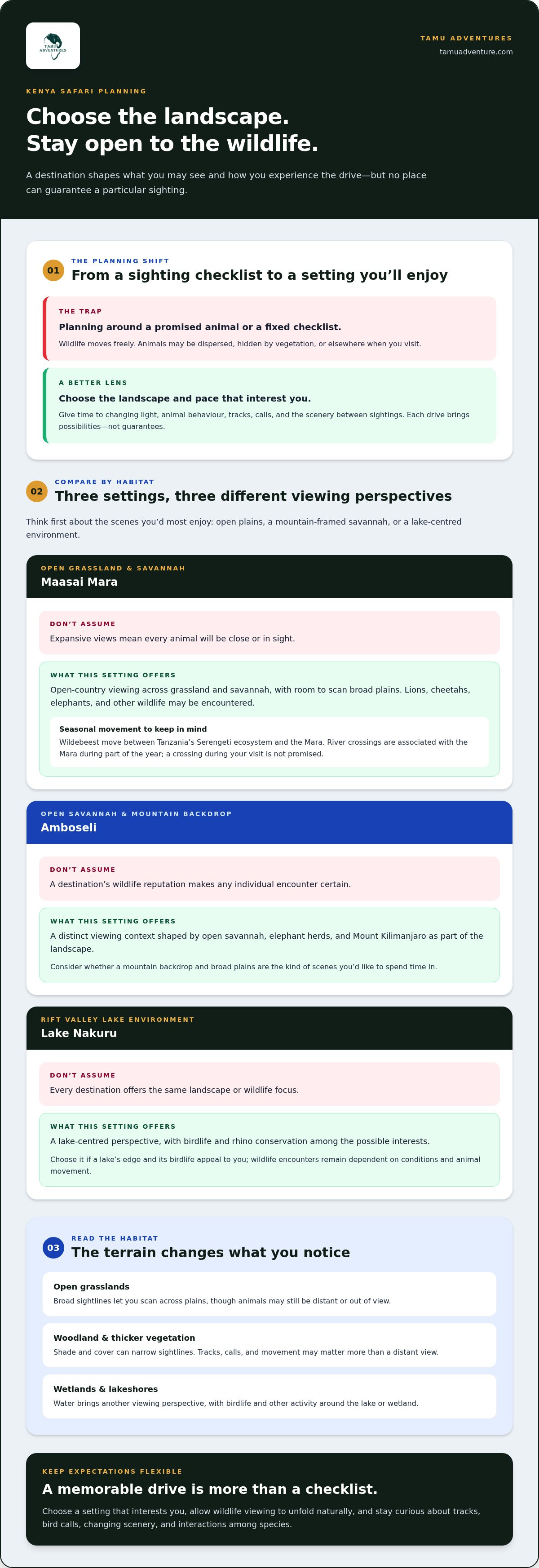
A destination’s landscape affects what you can see, how wildlife appears in the view, and what you notice along the way. Open grasslands give broad sightlines across plains, while woodland can offer shade and cover that make animals harder to spot. Wetlands and lakeshores bring a different perspective, with birdlife and other activity around the water. Each setting rewards a different kind of attention.
Habitat shapes wildlife visibility and viewing opportunities, but it never turns a possible encounter into a guaranteed one. Keep that in mind when choosing between destinations. A Kenya wildlife safari that combines different landscapes can offer variety in scenery and ways of observing nature, even though it can’t promise a particular animal at each stop.
Maasai Mara: open landscapes and varied game viewing
The Maasai Mara is known for open-country wildlife viewing across grassland and savannah. Its expansive views can make it easier to scan the landscape, though animals may still be distant or out of sight. Lions, cheetahs, elephants, and other wildlife may be encountered. The Great Migration is seasonal: wildebeest move between Tanzania’s Serengeti ecosystem and the Mara, with river crossings associated with the Mara during part of the year.
That seasonal movement is one reason to consider timing, not a promise of a crossing during your visit. Even in open country, vegetation, weather, and animal movement affect visibility. The Mara’s appeal also lies in the changing scale of the view: a wide plain invites you to look across the horizon, while a change in the grass may draw your attention to smaller details.
Amboseli and Lake Nakuru: different settings, different perspectives
Amboseli’s open savannah and elephant herds create a distinct viewing context, with Mount Kilimanjaro forming part of the landscape. Lake Nakuru offers a different setting around the Rift Valley lake, where birdlife and rhino conservation are among the possible interests. The character of each place matters as much as its wildlife reputation: one offers broad plains, the other a lake-centred environment.
Woodland and thicker vegetation elsewhere can narrow sightlines, making signs such as tracks, calls, or movement more important than a distant view. In open terrain, you may be able to observe animals from farther away. Neither setting is automatically better; each changes how you experience the drive and what you might focus on.
Think about which scenes you’d most enjoy: scanning open grassland, watching a lake’s edge, or taking in a mountain backdrop. Then consider whether you’d rather spend more time in one setting or include contrasting habitats in your itinerary. Tamu Adventures can shape a safari around your interests and preferred pace, aligning destination choices with the kind of experience you value.
How to compare Kenya safari destinations without chasing a checklist
Instead of trying to collect a long list of animal sightings, compare destinations by the setting you want to spend time in and the interests you’d like your trip to reflect. A Kenya wildlife safari can focus on broad savannah views, a mountain-framed landscape, or a lake environment. Each offers a different way to experience the outdoors, and none is the universally best choice for every traveller.
Use this comparison as a starting point. Possible wildlife encounters depend on conditions and animal movement. Planning considerations can help you decide which destination fits your schedule and preferred pace.
| Destination | Landscape | Possible focus | Planning considerations |
|---|---|---|---|
| Maasai Mara | Open grassland and savannah | Broad game viewing; possible encounters with lions, cheetahs, elephants, and other wildlife | Consider how much time you’d like in open-country surroundings and whether seasonal migration viewing is a priority. |
| Amboseli | Open savannah with views of Mount Kilimanjaro | Elephant country and a distinctive mountain backdrop | Choose it for its landscape character as well as wildlife interests; sightings and views vary with conditions. |
| Lake Nakuru | Rift Valley lake and surrounding habitat | Birdlife and rhino conservation among the possible interests | Consider whether a lake-centred setting adds the scenery and wildlife focus you want. |
Choose by the experience you value most
Start by deciding whether you’re drawn to general game viewing, birdlife, varied scenery, or simply more time outdoors. A broad interest in wildlife may suit an open landscape, while a particular curiosity about birds or lakeside habitats may point you toward a different setting. Keep the choice flexible: a destination can support an interest without guaranteeing a rare encounter or a specific view.
When does combining destinations make sense?
Combining destinations can add contrast, such as moving from open plains to a lake environment. It makes sense when your schedule has room for travel between stops as well as time to experience each place. Extra destinations also add transitions, which can make a short trip feel busy. If a slower pace matters most, fewer stops may leave more space to settle into each setting.
To narrow your options, choose your main wildlife or landscape interest, decide how much variety you want, then weigh that against available time and travel pace. This gives you a practical shortlist without turning the trip into a checklist. Tamu Adventures can use those priorities to shape a safari around your interests, schedule, comfort, and preferred pace.
How to plan a Kenya wildlife safari around your priorities
A good plan starts with what matters to you, not with how many destinations you can fit in. For a Kenya wildlife safari, a few clear priorities can help you choose where to go, how to travel, and where to leave room for rest. Use this sequence to turn broad interests into a manageable plan.
- Choose your wildlife and landscape interests. Decide whether you’re most drawn to open grasslands, lakeside scenery, birdlife, or a broad mix of wildlife. Treat these as preferences, not a checklist of sightings.
- Set your comfort preferences. Think about the kind of stay that suits you, from a camp to a lodge or hotel. Accommodation choices affect how you like to spend time between drives, so factor in comfort as well as location.
- Choose a pace that feels right. Consider whether you’d enjoy early starts and several activities, or prefer slower days with time to rest. A trip doesn’t need to include every possible experience to feel complete.
- Work within your available time. Count the days you can spend on safari, including the time needed to travel between destinations. This helps you decide whether to focus on one area or add a contrasting setting.
Turn interests into a manageable shortlist
Write down your preferred habitat, one or two wildlife interests, and the daily rhythm you’d enjoy. Use those answers to narrow the destination choices. For example, someone who values open views may prioritize a different setting from a traveller especially interested in lake scenery and birdlife. Neither preference guarantees a particular sighting; each simply helps guide the choice of place.
Comfort matters too. The right accommodation can support the kind of safari you want, whether that means prioritizing a welcoming base between outings or spending more time outdoors. Balance wildlife activities with rest and other interests, especially if you’re travelling with people who have different energy levels. For detailed seasonal considerations, use the separate guide, When is the best time for a Kenya safari?
Set expectations before choosing a route
More stops can bring more variety, but they also mean more time spent travelling and less time settled in each destination. Consider the whole day, not just the time on a game drive: transfers, meals, and downtime shape the pace too. Build in some flexibility, since road or weather conditions and animal movement can affect how a day unfolds.
Before settling on a route, decide which priority you’d keep if time became tight. That simple choice can help you avoid an overfull itinerary and make trade-offs with confidence. For practical day-to-day context, look for What to expect on a Kenya safari. Tamu Adventures can help shape a wildlife safari around your interests, schedule, budget, comfort, and preferred pace. Start planning a safari around your priorities.
Plan a Kenya wildlife safari with Tamu Adventures
Once you have a sense of the habitats and pace you prefer, the next step is bringing the pieces together. Tamu Adventures plans safaris around your wildlife interests, schedule, budget, comfort, and preferred pace. This connects destination choices with accommodation and the way you want to spend your time, rather than treating each decision in isolation.
You can start with a curated safari package or shape a tailor-made journey. Tamu Adventures offers 15+ curated safari packages, as well as personalized planning around individual travel preferences. Neither approach can control wildlife movement or promise sightings. Both can make the trip’s structure clearer, with choices that reflect what matters to you.
What personalized safari planning helps you coordinate
Destination, accommodation, and daily rhythm all affect how a safari feels. Tamu Adventures brings those considerations into one plan, matching your interests and schedule with handpicked camps, lodges, luxury camps, or hotels. This can simplify planning, especially if you’re weighing several destinations or balancing time outdoors with comfort and rest.
Share the priorities you’ve identified, such as a preferred landscape, a relaxed pace, or a particular level of comfort. These guide the itinerary, but they don’t determine which animals you’ll see. Wildlife remains part of the natural setting, not a scheduled feature.
Choose a safari style that fits your journey
A wildlife safari can suit travellers focused on game viewing, while family, luxury, and group safaris offer different ways to approach the journey. A tailor-made trip can bring your interests and practical preferences together in a personal plan. Think about who’s travelling, what kind of stay feels comfortable, and how full you want each day to be. Start with the style that feels closest, then refine the details.
Curated packages provide a planned starting point; tailor-made planning allows the journey to be shaped around your priorities. If you’re travelling with family, comfort and a manageable daily rhythm may carry as much weight as destination choice. For a group, shared interests can guide the balance of destinations and activities. Tamu Adventures plans journeys across Kenya and East Africa, keeping the overall trip’s schedule, budget, and preferred pace in view.
Planning support continues during the journey, with 24/7 support available. The aim is to reduce the burden of coordinating trip elements and give you a clearer plan, while leaving room for the natural uncertainty that makes wildlife viewing an experience rather than a checklist.
Explore Kenya safari options with Tamu Adventures and take the next step toward a journey shaped around your interests.
Shape a safari that feels right for you
Your plans don’t need to account for every possible encounter or include every destination. Start with the experience you want to make space for, then let that priority guide the details. A well-considered Kenya wildlife safari leaves room for both thoughtful planning and the unexpected moments that make time in nature meaningful.
To turn your ideas into a practical next step, explore the options and consider which journey best fits your interests and travel style. You can begin with a clear preference, even if the rest is still taking shape. Explore Kenya safari options with Tamu Adventures and take the next step at a pace that feels comfortable. Your safari can start with one simple choice.
Frequently Asked Questions
Can you see the Big Five on a Kenya wildlife safari?
It’s possible to see some or all of the Big Five, but no safari can promise every encounter. The term refers to lions, leopards, elephants, rhinos, and African buffalo. Your chances of seeing them vary with the destinations you visit, time spent on safari, and wildlife movement. If seeing a particular animal matters to you, use that interest to guide destination choices while keeping expectations flexible.
Is a Kenya wildlife safari suitable for first-time safari travellers?
Yes. A guided safari can be a comfortable introduction, especially if you tell your planner what would help you feel at ease. For example, you might prefer a familiar accommodation style, a less packed schedule, or clear guidance about what a typical game drive involves. Bring questions for your guide, too. Learning to spot tracks, calls, and behaviour can make the experience engaging between major sightings.
How many days should I allow for a Kenya wildlife safari?
There’s no single ideal length. Base your timing on how many destinations you want to visit, the travel between them, and how much time you’d like for game drives and rest. A shorter trip may suit one main area, while a longer break can allow more variety without rushing between stops. Decide how much time you can set aside first, then shape the route to fit it.
What should I pack for a Kenya wildlife safari?
Pack practical clothing for changing temperatures: light layers, comfortable trousers, and a warm layer for cool early starts. A sun hat, sunglasses, sunscreen, comfortable closed shoes, and personal medication are useful basics. Binoculars can help you observe animals and birds at a distance, while a camera lets you record moments without relying on a phone. Keep essentials easy to reach during the day.
Are wildlife sightings guaranteed on a Kenya safari?
No. Wild animals move freely, and their presence or visibility can change from one drive to another. A knowledgeable guide can interpret signs and adjust the outing to the conditions, but can’t control where animals go. Plan around the habitats and experiences you’re interested in, rather than treating sightings as a promise. Staying open to birds, tracks, and changing scenery can make the drive rewarding in its own right.
Can I combine a Kenya wildlife safari with a beach holiday?
Yes. A beach and safari trip can combine time in wildlife destinations with a more restful coastal stay. Allow for travel and transitions between the two parts when setting your schedule, so neither feels squeezed. Think about how you’d like to divide your time between game drives and downtime, then choose a pace that suits your travel companions. The trip can be planned around those preferences.
Do I need a guide during Kenya safari game drives?
Yes, guided game drives are the usual way to explore safari areas, and a guide adds useful context to what you see. They can help interpret animal behaviour, identify tracks, and explain features of the landscape. Their knowledge can also help you make the most of time in the vehicle. Follow their directions during the drive, and let them know which wildlife or landscape interests you most.


