

April and May are usually the most affordable months for a Kenya safari, within a low season that can extend from April to June. These months bring the long rains, which can mean lush scenery and fewer visitors, but also wet roads and some camp closures. If seeing the Great Migration in the Maasai Mara is your priority, its main Kenya window is July to October, when demand is higher.
Lower rates can make the rainy season appealing, especially if you value a quieter trip and green landscapes. The trade-off is that rain may affect game drives and accommodation choices, so the best timing depends on what matters most to you.
This guide explains when low-season costs may be lower, what to expect from Kenya’s rain, and how migration timing fits into your plans. You’ll be able to weigh savings against travel conditions and wildlife priorities, then choose a season that suits the safari you have in mind.
Key Takeaways
- Balance potential savings against rain, changing road conditions and seasonal camp closures when choosing your travel dates.
- Consider November for a quieter trip, short-rains scenery and birdwatching, while keeping some flexibility in your plans.
- If the Great Migration is central to your safari, plan around its July-to-October Kenya window and expect peak-season demand.
- Compare the full trip plan, including accommodation, transport and park visits, rather than judging value by the lodge rate alone.
- Choose your travel period by prioritising the experience you want most: lower costs, drier conditions or migration viewing.
1. Is It Worth Going on Safari in Kenya During the Rainy Season?
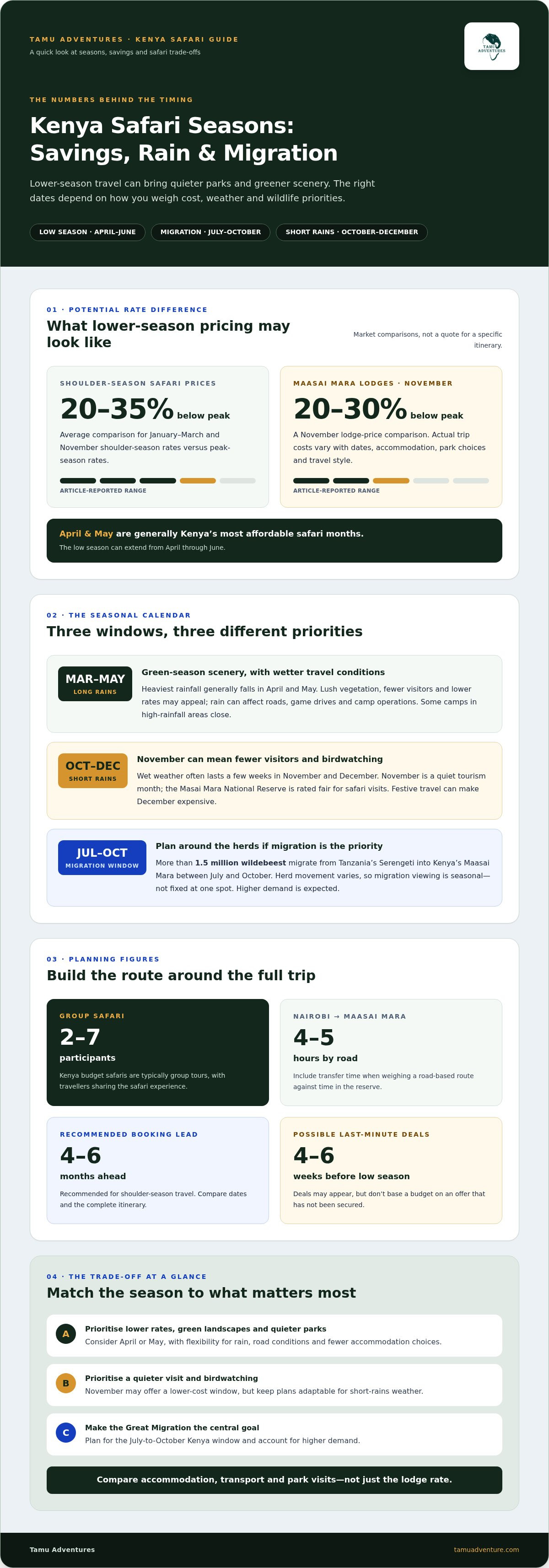
Yes, a rainy-season safari can be worthwhile if you value lower rates, green landscapes and quieter parks. April and May are generally Kenya’s most affordable safari months, while the low season can extend from April to June. The trade-off is wetter travel conditions and fewer accommodation choices in some areas. Your decision depends on whether savings and seasonal scenery matter more than dry-weather viewing.
Compared with peak season, the rainy season may bring lower costs and fewer visitors, but rain can affect roads, game drives and camp operations. Peak months are drier, and wildlife can be easier to spot where thinner vegetation improves visibility. The Kenya safari low season suits travellers who can be flexible about weather and daily plans. Travellers focused on the Great Migration in the Maasai Mara should weigh that goal against the usual July-to-October migration window.
Kenya’s long rains run from March to May, with the heaviest rainfall generally falling in April and May. Rain can be continuous during this period, rather than arriving only as a brief shower. April and May are also known as the green season. Vegetation becomes lush, and rain brings more food and water for wildlife. Conditions vary across Kenya, so a rainy month does not mean every destination experiences identical weather.
Green-season viewing has its own rewards. More vegetation can make some animals harder to see, yet the rainy season also brings wildlife births and the chance to see newborn animals. Resident herbivores give birth during the low season, and lions, leopards and spotted hyenas can generally be seen in the Maasai Mara. These are viewing opportunities, not guarantees of specific sightings. January offers a contrasting dry spell, when the landscape and wildlife patterns differ from April and May.
The Maasai Mara National Reserve offers wildlife viewing throughout the year, and May is rated good for safari visits. That makes the month a possible fit for visitors who want rainy-season scenery without ruling out the Mara. Still, some camps in Kenya’s high-rainfall areas close during April and May. Fewer open camps can narrow accommodation options, so match your destination and travel dates before settling on a route.
For practical planning, compare the weather trade-off with your main wildlife priority. If newborn wildlife and lush scenery appeal, April or May may suit your plans. If dry conditions and easier visibility matter more, consider a dry-season visit instead. Keep daily plans adaptable during the long rains, since changing weather can shape when and where drives take place. The rainy season is most rewarding when its conditions are part of the experience, not simply a way to seek lower rates.
2. November short rains as a lower-cost travel window
November offers a different value window from Kenya’s long rains. Short rains can affect parts of the country from October to December, often bringing wet weather for a few weeks in November and December. Safari rates can fall during this shoulder season as visitor numbers decline. November is also a quiet tourism month and is known for birdwatching. The Masai Mara National Reserve is rated fair for safari visits in November, so plan around your wildlife priorities.
Lower rates don’t mean every part of a trip costs less in the same way. Shoulder-season safari prices average 20–35% below peak-season rates for January–March and November, while Maasai Mara lodge prices in November are 20–30% below peak rates. Treat these as market comparisons, not a quote for a particular itinerary. Accommodation, travel dates, park choices and trip style all shape the final cost. Some camps close during low and shoulder seasons, which can also narrow accommodation choices.
For a more controlled budget, compare a group itinerary with a private trip. Kenya budget safaris are typically group tours with 2–7 participants, allowing travellers to share the safari experience. Road transfers from Nairobi to the Maasai Mara take 4–5 hours, so include that travel time when weighing a road-based route against time in the reserve. A Kenya itinerary combining Lake Nakuru with the Mara can add variety, but each stop affects the route and accommodation plan. Keep the number of destinations manageable to avoid spending too much of a short trip in transit.
Plan ahead, but leave room to compare dates. Booking 4–6 months ahead is recommended for shoulder-season travel; last-minute safari deals may also appear 4–6 weeks before low-season travel. Don’t build a budget around a deal that hasn’t been secured. For cover, read the policy terms for trip cancellation, medical needs, travel delays and weather-related disruption before departure. Match the cover to your route and planned activities, including any travel near the Tanzania border.
November can suit travellers seeking fewer visitors, birdlife and a chance of lower accommodation rates. December has short rains too, but festive travel can be expensive, so don’t assume the same budget conditions continue through the month. Compare the full itinerary and its travel days, not just a nightly rate. For a route that balances wildlife stops with a considered budget, explore Kenya safari planning as you shape your travel dates.
3. Great Migration timing
If the Great Migration is central to your safari, plan around the herds’ Kenya season rather than expecting peak viewing during the rainy months. More than 1.5 million wildebeest migrate from Tanzania’s Serengeti into Kenya’s Maasai Mara between July and October. The herds’ movement links two ecosystems, so the experience depends on where animals are during your travel dates. The migration is seasonal, not a fixed event at one viewing point.
July and August are the months when wildebeest move into the Masai Mara and cross the Mara River. The migration usually remains in Kenya throughout September, then begins moving back towards Tanzania’s Serengeti National Park around October. These broad windows help with planning, but they don’t identify an exact crossing date or location. If river crossings matter to you, allow time for game drives across the Mara rather than building the whole visit around one day.
Kenya’s peak safari season runs from July to October, coinciding with the Great Migration in the Masai Mara. Demand rises during this period, and peak-season safari rates are higher than in lower-demand months. Lodges and camps can also be busy, so make the migration your main priority before choosing dates and accommodation. September still falls within the usual Kenya window, while October brings the herds’ gradual return towards Tanzania.
The rainy low-season period also connects to the wider migration cycle. Herds begin their journey from the Serengeti towards Kenya during this period, before the main July-to-October window in the Mara. That movement doesn’t mean the most visible migration scenes happen in Kenya during the rains. Travellers choosing rainy-season dates should weigh green-season wildlife viewing against their particular interest in Mara herds and river crossings.
February offers a different wildlife focus. More than 500,000 wildebeest calves are born each year during the January-to-March calving season in Tanzania’s Ngorongoro and Serengeti conservation areas. That calving season is not the same as the later migration period in Kenya. Migratory birds are present in Kenya from November to April, and February is described as an excellent month for bird viewing in the Maasai Mara and Laikipia.
Choose your timing by naming your priority first: Mara migration, birdlife, or Tanzania’s calving season. Then match your route to that season, allowing enough time for game drives in the areas relevant to your goal. A safari focused on the Serengeti and Ngorongoro fits the Tanzania side of this cycle; a Mara-focused trip aligns with the herds’ Kenya window. This distinction helps set realistic expectations before you settle on travel dates.
4. Long rainy season and unpredictable rainfall
Kenya’s long rainy season runs from March to May, while another rainy period runs from November to December. Safari seasons vary by destination, and quieter periods can bring a different balance of weather, prices and accommodation choices. These periods don’t bring identical weather across the country. A route through the Maasai Mara, Amboseli or Lake Nakuru can encounter different conditions, so consider each destination rather than treating Kenya as one weather zone.
April and May bring the heaviest rainfall, and May averages 17 rain days and 300 mm of precipitation. Rainfall patterns can vary, and showers may occur outside the main rainy season. During the long rains, showers can affect road conditions and the timing of game drives. A flexible daily plan helps: allow time for changing conditions, and avoid relying on one fixed drive to reach a particular viewing area.
What should you pack for a Kenya safari in low season? Bring a lightweight waterproof jacket, quick-drying clothes and shoes with good grip for wet paths. Add a warm layer for evenings, when temperatures can fall to 13–15°C from early April to early June.
Rain doesn’t make every safari day cold. From early April to early June, daytime temperatures rarely drop below 26–28°C, so breathable clothing still matters. Pack a small dry bag for items you need during drives, such as a camera or notebook. A sturdy 4×4 safari vehicle is recommended for comfort and safety in rainy-season conditions. Your route and planned activities should shape what else goes into your luggage.
Kenya’s dry seasons run from January to February and June to October. During the June-to-October dry season, thinner vegetation and animals gathering around water can make wildlife easier to spot. A rainy-season safari offers a different experience: green scenery, more water and food for wildlife, and fewer visitors in safari parks. Choose between those conditions based on your priorities, not on the season name alone.
For a comfortable wet-season trip, build flexibility into each day and pack clothing suited to warm drives and cool evenings. April and May can combine lower safari rates with lush landscapes, but some camps in high-rainfall areas close during those months. That can narrow accommodation choices, including luxury stays. Comparing camp locations and your route before choosing travel dates helps you understand how weather may shape the whole safari, not just the view from the vehicle.
5. Mid-range and luxury safari costs
There isn’t one fixed low-season lodge rate in Kenya. During the long rains in April and May, Kenyan lodges offer rates 30–50% below peak-season prices. The exact saving depends on the property, travel dates, location and accommodation category. A mid-range stay and a luxury lodge can therefore offer different value, even within the same destination.
The total trip price depends on the itinerary and is provided after a quote request; key factors include accommodation, park fees, transport and the number of destinations. Compare these elements together rather than judging a safari by its nightly lodge rate. A lower room rate may not mean a lower overall trip cost if the route includes more transfers or park visits.
Park fees deserve close attention. The Maasai Mara National Reserve has higher non-resident park fees than most other Kenyan national parks, making it an important budget factor for Mara-focused trips. Routes that include Amboseli or Lake Nakuru also require you to account for the relevant park fees. Compare the planned park visits before choosing an itinerary, especially if wildlife viewing in several areas is a priority.
Accommodation inclusions can change the comparison. Check whether the quoted stay covers meals, game drives and transfers, or whether those are separate costs. Lodges in different locations can also affect how much time and transport your safari needs. For example, a route combining Amboseli and Nakuru involves different stops from a stay focused on the Mara. Make sure each option covers the same travel components before comparing totals.
Allow for expenses beyond accommodation and park entry. Tips for guides, drivers and lodge staff should be budgeted separately because they aren’t included in safari prices. Transport choices, extra activities and the length of your stay can also affect the overall spend. A clear itinerary helps you see which items are included and which you’ll pay for separately.
Low-season savings can make a mid-range or luxury adventure more attainable, but value depends on what the rate includes and where you want to go. April and May offer the strongest lodge reductions in the long-rains period, while seasonal camp closures can limit accommodation choices. If comparing a luxury stay with a mid-range option, weigh comfort and location against the full cost of moving between parks. Plan your Kenya safari itinerary around the parks, accommodation style and inclusions that matter most to you.
Tamu Adventures: Wildlife Safaris
Tamu Adventures helps you shape a safari around your preferred season, wildlife priorities and travel style. Its Wildlife Safaris provide a starting point for planning Kenya’s parks and reserves, while personalized trip planning helps align destinations, accommodation and travel dates. If you’re comparing a quieter low-season holiday with peak-season migration viewing, Tamu Adventures can plan the itinerary around the experience you value most.
Choose from Wildlife Safaris, Luxury Safaris, Family Safaris or Honeymoon Trips to match the journey you have in mind. The right option depends on your preferred comfort level, who is travelling and the wildlife experiences you want to prioritise. Tamu Adventures offers curated safari packages and planning support to help bring those choices together.
Contact Tamu Adventures to discuss your safari plans, or visit tamuadventure.com.
Shape a Safari Around What Matters Most
Your next step is to decide which experience should guide the itinerary: time in the bush, a particular level of comfort, or a trip suited to the whole family. A Kenya safari in the low season can be planned around your priorities, rather than simply choosing dates because they appear less busy. Think about the pace you want, the destinations you’d like to include and how much flexibility feels right for your holiday.
Tamu Adventures offers Wildlife Safaris, Luxury Safaris and Family Safaris, with trip planning to bring your preferences together. Share the kind of safari you’re imagining and the seasonal trade-offs you’re comfortable making. That gives you a practical starting point for shaping a journey that feels right for you.
Contact Tamu Adventures about your safari and take the next step towards planning a Kenya journey that suits you.
Frequently Asked Questions
What Is the "Cheapest Time" to Book a Kenyan Safari?
April and May are usually the cheapest months for a Kenyan safari, while November can also offer shoulder-season value. The best fit depends on whether your priority is the lowest rates or a particular wildlife experience. For example, someone focused on the Great Migration should compare the savings with the Mara’s migration season. If your dates are flexible, focus on lower-demand periods and compare complete itineraries, not just accommodation rates.
Is It Worth Going on Safari in Kenya During the Rainy Season?
Yes, if you’re comfortable with wet-weather travel and value green landscapes, fewer visitors and seasonal wildlife viewing. Rain may affect drive schedules and road conditions, while some camps close in wetter areas. Decide what matters most: a particular park, newborn wildlife, or a drier travel experience. Then choose dates and accommodation for that destination, rather than assuming rainy-season conditions are identical across Kenya.
What Determines Your Kenya Safari Cost?
Your total cost depends on travel dates, accommodation level, transport, park fees, route and trip length. A stay focused on one reserve differs from a multi-park route through places such as Amboseli and Lake Nakuru. Group or private travel also changes how expenses are shared. Compare itineraries with similar inclusions and destinations, then look at the total rather than treating one nightly rate as the whole safari budget.
What’s Included in Kenya Safari Prices?
Inclusions depend on the package, so compare the written itinerary and itemised costs before choosing. Look for clear details on accommodation, meals, transport, guide services, park entry and planned activities. Also identify what you’ll pay separately, such as tips for guides, drivers and lodge staff. If two itineraries cover different parks or travel arrangements, compare those differences before deciding which package offers better value.
Which Kenyan Safari Parks Are Most Affordable for Budget Travelers?
Most Kenyan national parks have lower adult entry fees than the Maasai Mara National Reserve, making them worth comparing for a budget-focused trip. Lake Nakuru and Amboseli can be considered alongside the Mara, but affordability depends on more than park entry. Factor in accommodation, transport between stops and the number of nights in each destination. A route with fewer transfers may help keep the overall plan simpler.
How Much Can You Save in Masai Mara Low Season?
Maasai Mara lodge prices in November are reported to be 20–30% below peak rates. The saving applies to lodge comparisons, not necessarily the total safari cost. Transport, park visits, accommodation type and trip length all affect the final budget. Compare the same property or similar accommodation and dates where possible, then account for the rest of the itinerary before estimating your overall savings.
Is April a bad time to visit Kenya?
No, April can suit travellers who welcome green scenery and low-season conditions. It’s part of the long rains, so wet weather may shape roads, game drives and accommodation options. Some camps in high-rainfall areas close during April and May. Choose your destination and stay with those conditions in mind, and consider whether your main priority is seasonal scenery or easier travel in drier weather.
What Hidden Costs Should You Plan Before Booking?
Budget beyond the quoted accommodation rate. Park fees, transfers, meals or activities not included in the package can affect your total, and tips for guides, drivers and lodge staff aren’t included in safari prices. Review the itinerary for each separate charge and note which costs are per person or tied to a specific park. This makes it easier to compare the real trip budget across different routes.


