

Peak season isn’t automatically the best time for a Kenya safari. The best time for Kenya safari travel depends on what you hope to see, how you like to travel, and which weather and crowd levels suit you. July to October is a broad window for the Great Migration in the Maasai Mara, but it also draws more visitors. A different month may better suit your plans.
It’s natural to want limited holiday dates to line up with memorable wildlife viewing. Migration movements and river crossings vary, so timing can improve your chances but can’t guarantee a particular sighting. Each season in Kenya offers a different balance of wildlife, scenery, comfort, and pace.
This guide compares the main options, from the dry months of January and February to the long rains from March through May and the short rains later in the year. You’ll learn how seasonal conditions can affect your itinerary, which periods may fit your wildlife priorities, and why the Mara’s migration window isn’t the only worthwhile choice. Planning around your dates and preferred pace can help you set realistic expectations and make the most of your time. Curated Kenya safari packages offer a practical starting point.
Key Takeaways
- The best time for Kenya safari travel depends on your wildlife priorities, preferred pace, and comfort with seasonal conditions.
- Compare dry-season viewing with greener periods to understand the trade-offs and choose what suits your trip.
- Migration timing shifts, so plan around a seasonal window rather than expecting a particular river crossing or sighting.
- Match your available dates with park conditions and leave room for flexibility in your itinerary.
- Personalized planning and curated Kenya safari packages can help align your interests, schedule, comfort, and seasonal pricing.
Best time for a Kenya safari: the short answer and seasonal overview
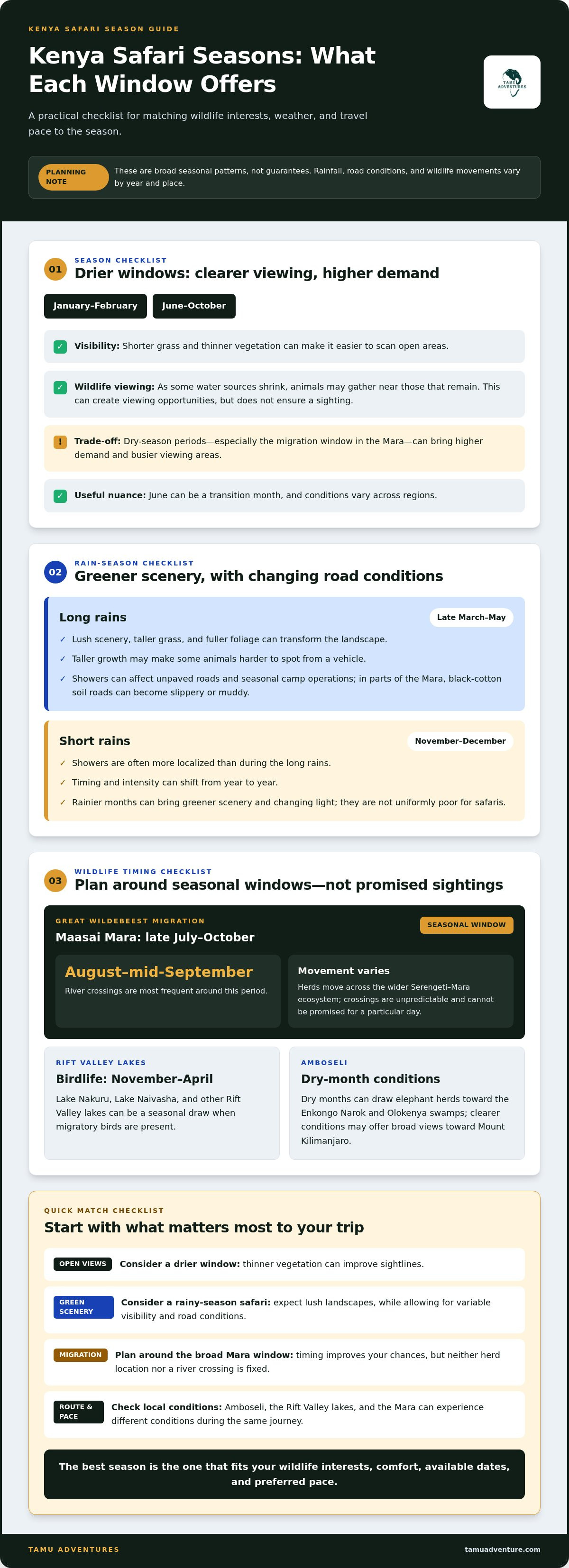
Dry months often suit classic wildlife viewing, but no single month is right for every traveller. June to October and January to February are commonly favourable periods. Drier conditions can mean clearer views through the bush and less standing water across the landscape. These are broad patterns, not a promise of sightings. Conditions differ between parks, and a dry spell in one area may not feel the same elsewhere.
Kenya’s long rains generally arrive from late March through May, while the short rains typically fall in November and December. Long rains can bring lush scenery and taller grass, which may make some animals harder to spot. Showers can also affect unpaved roads and seasonal camp operations, though the impact varies by location. Short rains are often more localized, but their timing and intensity can shift from year to year.
For migration-focused travel, the Maasai Mara is usually part of the picture from late July into October. However, the herds move across the wider Serengeti-Mara ecosystem rather than following a fixed calendar. River crossings are unpredictable, and wildlife viewing can be rewarding beyond the migration period. The Maasai Mara National Reserve is one part of this larger ecosystem, so dates alone can’t determine what you’ll see.
January and February offer another commonly favourable dry spell. They can suit travellers looking for a drier safari window outside the main July-to-October period. June can be a useful transition month, although conditions vary by region. Your route matters too: a trip that includes Amboseli, Lake Nakuru, or the Mara may encounter different local conditions during the same journey.
Dry season and rainy season in Kenya at a glance
In drier months, shorter grass and less dense vegetation can improve visibility. As some water sources shrink, wildlife may gather around remaining water, creating useful viewing opportunities without ensuring any particular animal will appear. Rainier months bring greener scenery and changing light. They can also mean muddy sections on some roads, so consider route and camp conditions alongside the forecast.
Why the best month depends on your safari priorities
If open views and classic game drives matter most, a drier window may suit you. If you value green landscapes, birdlife, or flexibility around dates, a rainy-season safari may be a better match. Migration interest calls for planning around the herds’ broad seasonal movement, not one hoped-for crossing. The best time for Kenya safari travel is the season that best matches your wildlife interests, comfort, and available dates. Use seasonal patterns to set expectations, then shape the itinerary around park conditions and your preferred pace.
How Kenya’s seasons shape wildlife, landscapes, and safari conditions
Rainfall changes more than the colour of the landscape. As grasses grow taller and vegetation thickens, animals can be harder to see from a vehicle. In drier periods, thinner cover may open up sightlines, while shrinking water sources can draw wildlife toward remaining water. Rain can also affect unpaved roads and the daily rhythm of game drives. The experience depends on the route, recent conditions, and terrain.
The Great Wildebeest Migration is a moving cycle across the Serengeti-Mara ecosystem, not a scheduled show. Herds typically spend part of the year in Kenya’s Maasai Mara from late July into October, and river crossings are most frequent around August to mid-September. These are seasonal tendencies, not fixed appointment dates. Rainfall and grazing influence herd movements, so a crossing can’t be promised on a particular day.
What dry-season conditions can mean for wildlife viewing
Less dense vegetation can make it easier to scan open areas, while animals may gather near water as other sources dry up. These conditions can support rewarding game drives, but they don’t guarantee a sighting or a close encounter. Dry-season periods, especially the migration window in the Mara, can also bring higher demand and busier viewing areas. If a quieter pace matters, factor that preference into your route and time in each park.
What the rains change across Kenya’s safari parks
Rainy months can transform the scenery with fresh grass, fuller foliage, and dramatic skies. They aren’t uniformly poor for safaris, but taller growth may make some animals less visible, and heavy showers can affect road access or daily plans. In parts of the Mara, black-cotton soil roads can become slippery or muddy during the long rains. Conditions vary, so flexibility in drive timing and routing can be helpful.
Park choice adds another layer. In Amboseli, dry months can draw elephant herds toward the Enkongo Narok and Olokenya swamps, while clearer conditions may offer broad views toward Mount Kilimanjaro. Around Lake Nakuru, Lake Naivasha, and other Rift Valley lakes, birdlife is a seasonal draw, particularly from November to April, when migratory birds are present. Water levels can also change after the long rains. A safari combining these areas may feel different from a Mara-focused trip.
Typical pattern: Kenya’s long rains fall mainly from late March to May, short rains often arrive in November and December, and the Mara’s migration period commonly spans late July to October. Actual rainfall, road conditions, and herd locations vary by year and place. Lonely Planet’s guide to the best time to visit Kenya offers another seasonal reference. For a route shaped around your dates and preferred pace, explore personalized Kenya safari planning.
Which Kenya safari months fit your wildlife and travel priorities?
Choose a travel window by deciding what matters most: open views, a chance to follow the migration, greener scenery, or a flexible pace. The comparison below is a starting point, not a fixed rating. Park conditions and wildlife activity can differ, even within the same season.
| Broad period | Typical seasonal character | Possible advantage | Planning trade-off |
|---|---|---|---|
| June to October | Mostly dry, with seasonal variation between areas | Thinner vegetation can support clearer viewing; the Mara migration period generally falls within this window | High demand and more visitors may affect the feel of popular areas; crossings aren’t predictable |
| January to February | A commonly favourable dry spell | Can offer good visibility without centring the trip on the Mara migration | Dry conditions and wildlife activity vary by park and year |
| March to May | Long rains, greener landscapes, and possible muddy roads | Appeals to travellers who value lush scenery and seasonal atmosphere | Thicker vegetation may make some wildlife harder to spot; showers can affect plans |
| November to December | Short rains, often with localized showers | Green scenery and a different seasonal feel, with birdlife a draw in some areas | Rain timing varies, and late December can have holiday demand |
When to plan around the Great Wildebeest Migration
The Maasai Mara migration period is generally associated with July to October, making these months a natural focus for travellers hoping to follow the herds in Kenya. But migration is movement, not an event scheduled for a specific date. Herd locations respond to changing conditions across the ecosystem, and river crossings can’t be timed to a visitor’s itinerary. If migration is a priority, allow room to enjoy other wildlife and landscapes too, rather than measuring the trip by one crossing.
Choosing between wildlife visibility, scenery, and a calmer pace
For travellers who value open sightlines and classic game drives, the drier months from June to October may fit well. January and February provide another dry-season option, especially if migration isn’t the main focus. Neither window guarantees sightings, and popular periods can feel busier.
If the landscape matters as much as visibility, the green months can be a rewarding choice rather than a second-best alternative. Lush scenery, changing light, and seasonal birdlife can shape a memorable trip, while rain may call for a flexible daily plan. A calmer pace is also a valid priority, but no month is reliably quiet across every park. The best time for Kenya safari travel is the window that balances your wildlife interests with the conditions and pace you’ll enjoy.
How to plan Kenya safari dates around weather, crowds, and your schedule
Once you have a season in mind, turn it into a workable plan. Start with the dates you can travel, then match your wildlife interests and preferred pace to park conditions. This keeps the itinerary grounded in what matters to you, rather than trying to fit every destination into a limited holiday window.
A simple date-planning sequence for first-time safari travellers
Use these four steps to narrow your options. The best time for Kenya safari travel is easier to identify when you set priorities before choosing specific dates.
- Rank your priorities. Decide whether migration interest, general wildlife viewing, green scenery, or a calmer pace matters most. If you’re hoping to see a particular event, keep other wildlife experiences in view too.
- Choose a travel window. Compare your available dates with broad seasonal patterns. If your holiday falls in January or February, for example, consider whether a dry-season safari outside the main Mara migration period suits your goals.
- Compare park conditions. Look at the destinations that fit your interests and how seasonal changes may affect each one. A route through the Maasai Mara, Amboseli, and Lake Nakuru offers different landscapes and wildlife settings, so don’t assume one month will feel the same at every stop.
- Allow flexibility. Leave breathing room in the itinerary where possible. Weather, road conditions, and animal movements can change, so a balanced schedule is more comfortable than one built around a single sighting or tightly packed daily drives.
This approach also helps you decide where to spend more time. If migration is a central interest, build the trip around the Mara while keeping expectations flexible. If scenery or a varied route matters more, spread your focus across parks with different habitats rather than treating one seasonal highlight as the whole safari.
How to account for seasonal demand and park choice
Sought-after travel periods can bring higher demand and more visitors, particularly in popular safari areas. That doesn’t mean you need to avoid them. Instead, make your dates, park choices, accommodation preferences, and desired pace work together. A trip focused on the Mara during its migration season may feel different from a visit to Amboseli or the Rift Valley lakes at another time of year.
Consider the whole journey, not just the calendar. A first-time traveller with a short holiday might prefer fewer stops and more time in each area, while someone with flexible dates may be able to weigh seasonal scenery against wildlife priorities. Tamu Adventures’ personalized planning and curated Kenya safari packages can align your schedule, interests, comfort, and pace, with low- and peak-season pricing considered as part of the plan.
Explore a considered Kenya safari plan and shape your travel dates around the experience you want.
Plan your Kenya safari season with Tamu Adventures
Your preferred season is a starting point. The right itinerary also needs to fit your available dates, wildlife interests, comfort, and preferred pace. Tamu Adventures plans personalized journeys that bring these details together, helping you shape a Kenya safari around the experience you want rather than a calendar recommendation alone.
Turning your preferred season into a workable safari plan
Start with your travel window and the experiences that matter most. If migration is a priority, the Maasai Mara may be central to your route. A trip focused on varied landscapes could combine the Mara with Lake Nakuru or Amboseli. Seasonal conditions differ by area, so a considered route can balance your priorities with the practical realities of your dates.
Curated Kenya safari packages offer a useful starting point, not a one-size-fits-all schedule. Tamu Adventures can tailor the plan around your interests and holiday window, with low- and peak-season pricing considered as part of the planning. A thoughtful pace also leaves room for changing conditions, unhurried game drives, and time to enjoy each stop without overloading the itinerary.
What personalized safari planning helps coordinate
Planning brings together the details that shape how the trip feels: wildlife interests, schedule, budget, comfort, and pace. Handpicked camps and lodges provide a considered base for the route, while 24/7 support offers practical reassurance during the journey. These details can make it easier to focus on the experience while keeping expectations grounded in the season and destinations you choose.
The best time for Kenya safari travel is personal. A dry-season window may suit one traveller’s wildlife priorities, while another may prefer greener scenery or dates that work better with family and work commitments. Tamu Adventures helps coordinate those choices into a safari plan that reflects your needs, without treating wildlife sightings as guaranteed.
Explore Kenya safari options and find a season and itinerary that suit your plans.
Start shaping a safari around your dates
Your travel window doesn’t need to line up with a single headline wildlife event to make a meaningful safari. Start with the dates you have, then consider what kind of days you want to experience. That gives you a practical foundation for choosing a route and pace that feel right for you.
Tamu Adventures offers more than 15 curated safari packages as starting points for a personalized plan. Handpicked camps, lodges, luxury camps, and hotels help shape your stay, while 24/7 support provides assistance throughout the journey. The best time for Kenya safari travel is the one that fits your priorities and schedule, with realistic expectations built into the plan.
Take the next step at your own pace. Explore Kenya safari options with Tamu Adventures and begin planning a journey that feels considered from the first date to the final day. Kenya’s landscapes are ready to welcome you.
Frequently Asked Questions
Is Kenya a good safari destination year-round?
Yes, Kenya offers safari experiences throughout the year, though the best time for Kenya safari travel depends on what you want from the trip. For example, a birding-focused visit around the Rift Valley lakes may suit different dates from a journey centred on open views in the savannah. Consider how seasonal conditions fit each stop on your route, and leave room for natural changes in wildlife activity.
Can I see the Great Wildebeest Migration in Kenya in a specific month?
No month can guarantee a migration sighting or river crossing. Herds are generally associated with the Maasai Mara from around July to October, but they move in response to natural conditions rather than a visitor’s schedule. If migration is a key priority, plan within that broad window and make sure the rest of your itinerary offers worthwhile experiences too. That way, the trip doesn’t depend on one event happening on one day.
How far ahead should I book a Kenya safari during peak season?
Start planning as soon as your travel window takes shape, especially if you have specific accommodation preferences or fixed dates. Popular travel periods can bring higher demand, so early planning gives you more room to coordinate dates, parks, and lodging. Flexible dates can also make it easier to shape an itinerary around your priorities.
Does the rainy season make a Kenya safari a poor choice?
No, the rainy season isn’t automatically a poor choice. It can suit travellers who enjoy greener scenery and don’t mind adjusting plans if showers affect a road or game drive. For example, keep a day’s schedule flexible rather than expecting every drive to follow a fixed timetable. Conditions differ between parks and years, so consider your comfort with changing weather alongside the landscapes and wildlife experiences you value.
Are Kenya’s safari parks crowded during the migration season?
Popular parks, including the Maasai Mara, can be busier during sought-after travel periods, but visitor levels vary by date and location. If a quieter experience matters, consider how much time to spend in the busiest areas and whether your priorities support a varied route. It can also help to plan a daily pace that doesn’t depend on spending every available hour at a single wildlife viewing spot.
How do seasons affect the cost of a Kenya safari?
Safari costs vary with the season, accommodation, itinerary, and travel dates, so compare complete trip plans rather than assuming a month determines the total. A lower-season package may suit one schedule, while peak-season dates may better match another traveller’s priorities. Tamu Adventures offers curated packages with seasonal pricing, giving you a starting point for comparing options alongside the parks, lodging style, and pace that fit your plans.


