

A safari itinerary for families can work well in five to seven days, though that usually allows time for only one or two destinations. For a first trip in Kenya, seven days is a practical minimum, leaving time for game drives and travel between stops.
Choosing a family safari involves more than picking a park. Children’s ages, transfer times and the pace of each day all affect what feels manageable. A private vehicle can make it easier to adjust the schedule to your family.
This guide compares Kenya, South Africa and Botswana to help you weigh family safari options. You’ll see how private vehicles support flexible days, what to consider when planning around children, and which inclusions and exclusions to look for in a package. Use it as a starting point for choosing a destination and pace that suit your family.
Key Takeaways
- Compare Kenya, South Africa and Botswana by the family’s preferred safari style, children’s ages and the pace of travel.
- Plan private-vehicle days around your children’s comfort; children aged five and above often manage game-drive routines and longer transfers more comfortably.
- For a Maasai Mara visit, wildebeest river crossings are possible from July to October, but wildlife sightings can’t be scheduled.
- Read package inclusions and exclusions closely so you can see how accommodation, transport, park fees and activities are handled.
- Choose family-friendly camps and lodges with your daily routine in mind, including time to rest between outings.
1. What Is the Best Kenya Safari Itinerary for Families?
A practical five-day family safari can pair Nairobi with Ol Pejeta Conservancy, keeping the trip to two destinations. The Ol Pejeta family itinerary lasts five days and four nights, and the drive from Nairobi takes around five hours. It offers a focused wildlife stay without trying to cover several distant parks.
For a comfortable pace, plan to rest after arriving in Nairobi, then travel to Ol Pejeta and settle in before scheduling full game-drive days. Families wanting a broader introduction can use five to seven days for one or two destinations. Keep transfer days light, especially while children adjust to flights, new surroundings and early starts.
Choose lodges and camps based on how their setup fits your family’s routine. A family room or adjoining accommodation can simplify evenings, while staying close to planned activities can reduce extra transfers. Compare age rules, meal arrangements and available activities with your children’s ages and interests. These details can matter as much as the park itself.
Match destinations to the experiences your children can enjoy. Ol Pejeta offers a focused conservancy stay; Lake Naivasha adds a different setting to a Kenya route. Some family safaris set a minimum age as low as six years. Walking safaris are available to children aged 12 and older, so they may suit families with older children rather than toddlers.
- For younger children: keep the route to two destinations and allow time to rest after transfers.
- For school-age children: balance game drives with camp downtime and activities suited to their interests.
- For teenagers: consider longer wildlife outings and walking experiences for those aged 12 and older.
Parents can also compare activity rules before settling on a national park or camp. A game-drive-focused safari may be better suited to older children. That makes age-appropriate options important: shorter outings and varied activities may work better for younger children than a schedule built around extended drives.
For a Kenya safari with children, pack light layers, comfortable walking shoes, sun hats, sunscreen, refillable water bottles and binoculars. Keep a small day bag ready for outings, with a change of clothes and familiar snacks for the children. Pack essential travel documents separately so they are easy to reach during transfers.
2. Family safari destinations in Kenya, South Africa and Botswana
When planning a safari itinerary for families, compare destinations by wildlife setting, travel pace and the experiences your children want. In Kenya, consider Maasai Mara, Amboseli, Lake Nakuru and Lake Naivasha. A shorter route can focus on two places, while a longer holiday can include more variety without crowding every day.
Kenya suits families looking for classic game drives across varied landscapes. Maasai Mara is a reserve known for wildlife viewing, while Amboseli offers a distinct safari setting. Lake Nakuru and Lake Naivasha can add variety to a longer route. In South Africa, the Eastern Cape and Madikwe Game Reserve are presented as malaria-free safari options for families. Botswana is another destination to compare when considering a different safari style in Africa.
For a first Kenya trip, seven days is a practical minimum. A 10-day itinerary gives more room to spread out travel and time in parks. One example begins with arrival in Nairobi on day one, visits Lake Nakuru on day five, travels to the Maasai Mara on day six, spends days seven through nine in the Mara, then returns to Nairobi on day ten. Keep transfer days distinct from longer game drives.
Seasonal timing can shape the experience and the pace. April–May and November are shoulder seasons with lower rates for family safaris. Kenya’s January average minimum temperature is 15°C, its average maximum is 29°C, and rainfall is 51 mm. South Africa’s listed June minimum is 8°C, so pack layers for cool mornings. In Tanzania, consider the route and activities when choosing travel dates.
Before settling on dates, decide whether your family prefers wildlife drives, walking activities or time to rest. Walking safaris are available to children aged 12 and older, so age rules can affect the route. Families with younger children may prefer drives and shorter transfers. A Kenya family safari can also include a three-to-five-day beach extension at Diani Beach or Zanzibar.
To compare options, list each destination, travel day and main activity, then remove stops that make the schedule feel rushed. This gives your safari itinerary for families a clear starting point, based on the places and pace that suit your group. A Kenya family safari itinerary can help you consider how parks and travel time fit together.
3. Private vehicles and flexible itineraries for young children
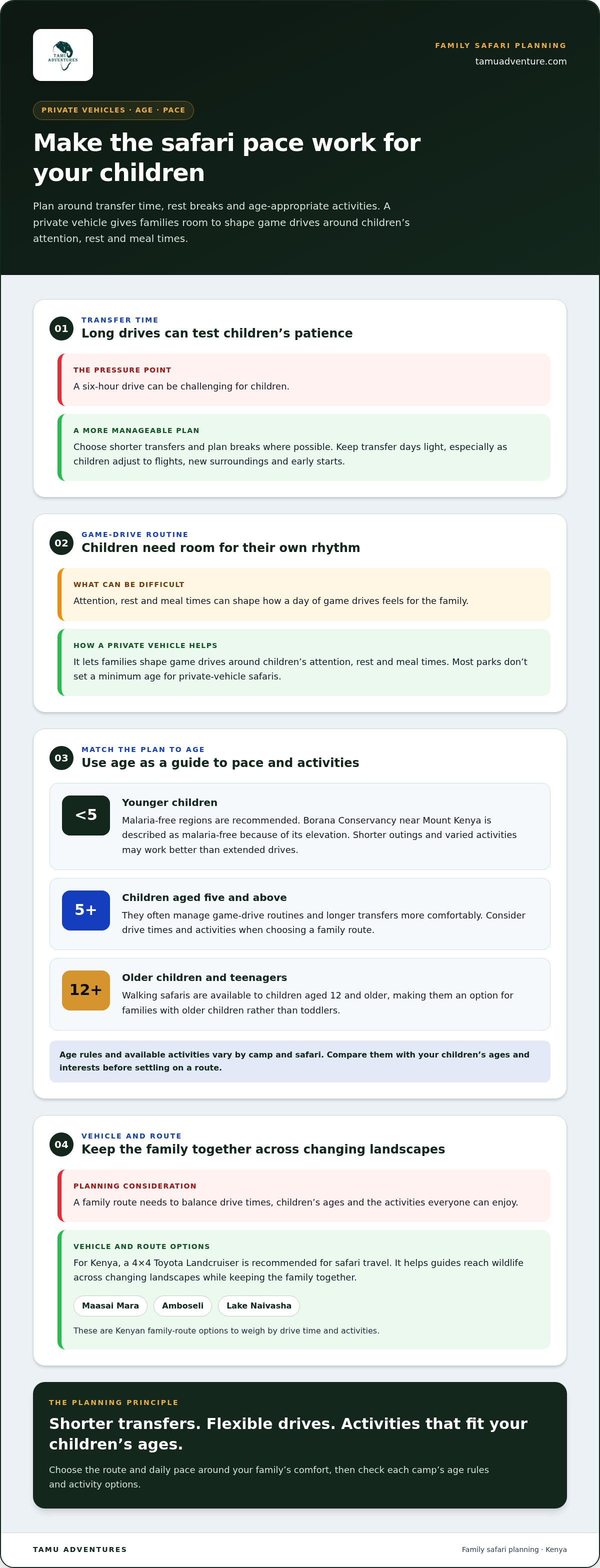
Private vehicles let families shape game drives around children’s attention, rest and meal times. Most parks don’t set a minimum age for private-vehicle safaris, so this option can suit younger children. A six-hour drive can test children’s patience; plan shorter transfers and breaks where possible. For Kenya, a 4×4 Toyota Landcruiser is recommended for safari travel. The vehicle helps guides reach wildlife across changing landscapes while keeping the family together.
Which Kenyan safari parks suit children of different ages? For children under five, malaria-free regions are recommended; Borana Conservancy near Mount Kenya is described as malaria-free because of its elevation. Children aged five and above often manage game-drive routines and longer transfers more comfortably. Consider Maasai Mara, Amboseli and Lake Naivasha for family routes, weighing drive times and activities.
Age also affects which experiences are appropriate. Children aged eight and over are generally likely to get the most from a family safari, while ages five to eight can suit carefully paced wildlife viewing. Children aged 12 and older can join walking safaris. A traditional safari focused only on game drives is recommended for children aged 14 and older, so families with younger children should consider a varied schedule.
What are Kenya’s age limits and rules for children on game drives and walking safaris? Most parks don’t set a minimum age for private-vehicle safaris, but walking safaris are for children aged 12 and older. A game-drive-only trip is recommended for children aged 14 and older, while five-year-olds often manage drive routines more comfortably.
Use a private vehicle to adapt the day instead of expecting every child to follow an adult schedule. Start with a shorter wildlife outing, return to camp for a break, then decide whether another drive suits the group. If children tire early, your family can end the outing without holding up other guests. That flexibility can make wildlife viewing more relaxed for children and parents alike.
Accommodation matters, too. Compare each camp’s age rules with your children’s ages and planned activities. Before booking, consider the layout, walking distances between rooms and shared areas, and whether everyone can rest comfortably between outings. Before the first drive, explain basic vehicle routines, such as staying seated while the vehicle is moving and following the guide’s instructions near wildlife.
Make wildlife viewing engaging with simple tasks. Ask children to notice tracks, bird calls or differences between the Mara and Amboseli landscapes. A guide can explain how animals use their habitat, helping children connect sightings with conservation. Binoculars and a wildlife notebook give older children a hands-on focus, while shorter drives and quiet time at camp may suit younger travellers.
Before choosing a route, match children’s ages to activity rules, then compare transfer demands and accommodation. A private safari vehicle gives families more control over daily timing, while the destination shapes the landscapes and experiences available.
4. Masai Mara game drives and cultural experiences
Set aside days 11–13 for the Maasai Mara National Reserve when building a longer Kenya family route. Three days give families room to plan game drives at a measured pace, with time between outings. Wildlife viewing depends on where animals are during each drive, so guides help shape the day around current sightings. Treat each drive as an opportunity to observe, rather than a checklist of animals.
The Great Migration adds seasonal interest to planning in the Mara. Wildebeest river crossings are possible from July to October, when thousands of wildebeest and zebras make their annual journey. Visiting then offers a chance to learn about migration, but crossings follow animal movements, not a family schedule. Guides can explain how herds move across the reserve and why river areas attract attention.
Use game drives to make wildlife sightings a shared learning experience. Children can watch how animals move, compare tracks or note which species appear near water. One family reported seeing all five members of the Big Five, including rhinos, during its Maasai Mara drives. This illustrates the variety families may encounter, though wildlife activity varies from day to day.
For cultural time, the itinerary places days 9–10 at Maji Moto Cultural Camp before the Maasai Mara stay. That sequence gives families a change of focus before returning to wildlife drives. Approach a Maasai cultural experience as a chance to listen and learn. Parents can help children prepare respectful questions about daily life, traditions and the community’s connection to the surrounding landscape.
A village visit works best when children understand they are guests, not spectators. Encourage them to follow their hosts’ guidance, ask before taking photographs and listen without interrupting. These simple steps help make the encounter thoughtful for children and adults. Pairing cultural learning at Maji Moto with wildlife observation in the Mara brings two distinct experiences into one Kenya itinerary.
Plan Mara days around your family’s energy. Choose a drive, allow time to rest at camp, then decide whether another outing suits the group. Families travelling from Nairobi should also leave room for transfers in the wider route, rather than scheduling a full day immediately after arrival. A calm rhythm gives children time to absorb what they’ve seen, from herds crossing the plains to a guide explaining rhinos.
Before departure, give each child a small observation task, such as noticing animal behaviour or remembering a new fact from the guide. After a drive, share observations over a meal or write them in a travel notebook. This simple routine connects the Mara’s wildlife and Maji Moto’s cultural experience, making the journey more engaging without adding stops.
5. Safari inclusions and exclusions
A safari package is easier to compare when each part of the trip is clearly set out. For a Kenya family holiday, list accommodation, ground transport, park activities and meals separately. Mark which items the package includes and which are separate. This review helps parents estimate the full trip budget and avoid assuming every service is part of one booking.
Start with the itinerary. If it names Nairobi, Amboseli and the Maasai Mara, check how travel between stops is handled. Look for the transport type, whether game drives are included and what transfer days involve. For families, these details affect the daily rhythm as much as the choice of well-known parks.
Give accommodation its own line. Record the named lodge or camp for each stop, the room arrangement and the meals described in the package. Families comparing a northern Kenya stay with a Mara camp should be able to see where each night is spent. Match the accommodation plan to children’s needs, planned activities and time to rest.
Read activity descriptions closely, too. A schedule might mention game drives, a cultural visit or time near a lake, but those labels alone don’t explain what is included. Note each activity, location and day, then distinguish planned experiences from optional additions. For example, a family hoping to see elephants should understand that a wildlife outing does not guarantee a sighting.
List park fees and other entry charges separately in your comparison. Keep them distinct from accommodation and transport to make the overall itinerary easier to understand. List international flights separately from local arrangements as well. Tamu Adventures does not offer international flights, so families should plan overseas air travel separately.
Use a short checklist before choosing between packages:
- Stay: name the lodge or camp for each destination and note the planned meals.
- Travel: identify transfers between Nairobi, the reserve and any additional stop.
- Activities: distinguish scheduled drives from optional experiences.
- Separate costs: note flights and any park or activity charges shown outside the package.
Finally, consider what each holiday is designed to deliver. A route focused on wildlife and conservation may suit children keen to learn about habitats; a multi-stop adventure may appeal to families wanting varied landscapes. Clear inclusions let parents compare priorities without mistaking a planned experience for a guaranteed animal encounter.
For a family trip that brings accommodation, destinations and activities into one considered route, explore family safari planning.
Tamu Adventures: Wildlife Safaris
Tamu Adventures plans personalized East African journeys, including Wildlife Safaris and Family Safaris. Turn to its trip-planning support once you’ve narrowed down your preferred destinations and want help shaping the route, pace and accommodation around your family. Your priorities for wildlife viewing, rest time and cultural activities can guide the itinerary. Luxury Safaris and Honeymoon Trips are also available for travellers with different priorities.
A considered plan can make it easier to see how each stop fits together, from travel between destinations to the balance of activities and downtime. Share the kind of experience your family wants, and explore a route that reflects those priorities. Contact Tamu Adventures to discuss your safari plans.
Shape a Safari That Fits Your Family
The right family trip begins with a shared idea of what makes a day enjoyable. Talk through the pace your children can manage, the wildlife they hope to see and how much time you want for rest. These choices give your safari itinerary for families a personal foundation, rather than a schedule built around stops alone.
Tamu Adventures can turn those preferences into a considered East African journey. Family Safaris are designed for families planning together, while Wildlife Safaris and Luxury Safaris suit different travel priorities. A useful next step is to outline your preferred destinations and the experiences that matter most, then use them to guide the planning conversation.
Plan your safari with Tamu Adventures, and take the next step toward a family journey designed around your interests.
Frequently Asked Questions
What Are the Best Safari Parks for Children?
Maasai Mara, Amboseli, Lake Nakuru and Lake Naivasha are options to compare for a Kenya family trip. Choose based on the experience your children will enjoy, whether wildlife viewing, different scenery or a route combining more than one setting. For younger children, weigh transfer demands alongside the park. The best fit gives your family time to enjoy activities without making each day feel rushed.
What Is the Best Kenya Safari Itinerary for Families?
A five-day plan can focus on Nairobi and Ol Pejeta Conservancy, with four nights across the trip. Keep the route simple: allow time to arrive in Nairobi, travel to Ol Pejeta, enjoy the conservancy, then return for departure. This suits families wanting two destinations and a focused wildlife stay. If you want more regional variety, allow more time instead of squeezing extra stops into the same schedule.
Should I Go on Safari With Kids?
Yes, a safari can be a rewarding family holiday when the daily plan suits your children. Private-vehicle game drives let your family keep outings flexible, while activities between drives offer a change of pace. Include downtime rather than scheduling wildlife viewing from morning to evening. Before choosing a route, consider how your children manage travel, early starts and time in a vehicle. Their interests can help shape the parks and activities that feel engaging.
How Do Driving and Flying Affect a Family Safari?
Driving gives families a chance to travel overland between destinations, while flights can shorten some transfers. The drive from Nairobi to Amboseli takes roughly four hours, while a flight from Nairobi to the Maasai Mara takes about 45 minutes. Include transfer time when planning activities on arrival days. Flights may simplify the journey, while road travel lets families move between stops by vehicle. Choose the option that best fits your route and children’s comfort.
In What Way Are These Holidays Child Friendly?
Family safari holidays work best when children’s needs shape the pace and activities. A private vehicle can make it easier to adjust a drive, while suitable accommodation gives families a place to rest between outings. Include activities that encourage children to notice wildlife, such as observing tracks or recording sightings. A simple notebook, for example, can help a child remember animals and questions to discuss with a guide after a game drive.
What Age Works Best?
Children aged eight and over are generally likely to get the most from a family safari, though age alone doesn’t determine the right trip. Children aged five and above often manage game-drive routines and longer transfers more comfortably. Walking safaris are available to children aged 12 and older, while a game-drive-only safari is recommended for children aged 14 and older. Choose activities and travel times around your child’s stamina and interests.
What Cultural Activities Are Available for Families?
Families can include a visit to Maji Moto Cultural Camp in a Kenya itinerary. Use the experience to learn about Maasai culture through attentive listening and respectful conversation. Parents can invite children to prepare questions about daily life, traditions and the local environment. Remind them to follow their hosts’ guidance and ask before taking photographs. This approach makes cultural activities more thoughtful and helps children engage with the people they meet.
What Is There to Do Besides Game Drives?
Walking safaris and cultural experiences can add variety to a Kenya family trip. Walking safaris are available to children aged 12 and older, while a visit to Maji Moto Cultural Camp offers a different way to learn about local culture. Families can also add a three-to-five-day beach extension at Diani Beach or Zanzibar. Choose alternatives based on children’s ages and interests, and leave space in the itinerary to enjoy each experience at a comfortable pace.


