

A safari vehicle typically accommodates 4-7 passengers, so couples may share game drives with other travellers unless they choose a private vehicle. An East Africa safari for couples can be shaped around that choice, the kind of accommodation you prefer and how much time you want to spend on safari or at the coast. Sharing can suit travellers who value a social, practical trip; a private vehicle offers more control over the pace and daily schedule.
It’s natural to want comfort and unhurried time together while keeping your budget in view. The right balance depends on your travel style, chosen destinations, accommodation and whether you plan to include beach time.
This guide explains how vehicle sharing works, how accommodation choices shape a couples’ safari and what affects the overall cost. It also covers slower-paced itineraries and ways to combine wildlife viewing with beach time, helping you plan a trip that feels considered from the first game drive to the final days by the sea.
Key Takeaways
- Compare camps, lodges and hotels by the comfort and atmosphere you want, then match your stay to the destinations on your route.
- See how accommodation choices, transport and itinerary shape your safari budget, and decide where flexibility matters most.
- Plan a safari-and-Zanzibar itinerary that leaves room to enjoy both wildlife experiences and time on the coast.
- Choose a travel pace and game-drive arrangement that suit your preferences as a couple, rather than squeezing too many stops into one trip.
What types of accommodation options are available on East African safaris?
The best East African safari destinations for couples depend on the wildlife and pace you want. Kenya offers the Maasai Mara, Samburu, Laikipia and Meru; Tanzania adds the Serengeti, while Uganda and Rwanda suit itineraries that include forest landscapes. Each destination gives your stay a different setting, from open plains to quieter, wooded areas.
Kenya and Tanzania both offer memorable wildlife viewing, but the landscapes shape the experience. The Maasai Mara is known for open plains and wildlife drives, while Tanzania’s Serengeti covers 14,750 square kilometres. A Kenya-and-Tanzania itinerary can pair distinct regions, while a single-country stay keeps travel between destinations simpler.
Accommodation ranges from tented camps and safari lodges to hotels, with comfort and location varying by destination. In the Maasai Mara, a camp close to wildlife areas can make early drives more convenient. In Tanzania, a lodge or camp near the Serengeti suits travellers who want to focus on the plains and animals. In Kampala, Kigali or Zanzibar, hotels provide a different base from a remote safari camp.
For a couples’ safari that includes a beach stay, a listed East Africa Safari & Coast trip runs for 13 days. A Kenya, Tanzania and Zanzibar itinerary combines wildlife destinations with time on the island. Kenya-and-Tanzania combined packages are another option when you want two safari countries without adding Zanzibar.
Couples can look for intimate tented camps or lodges with a quiet setting and comfortable shared spaces. Honeymoon-focused stays may offer romantic touches, but the right choice depends on the destination, accommodation style and itinerary.
Visa, vaccination and entry requirements depend on your passport and the countries on your route, including Kenya, Tanzania, Uganda or Rwanda. Plan for each country’s entry documentation and health requirements before travel. For safety, follow your guide’s directions during game drives, remain in designated areas, and carry suitable sun and insect protection.
Couple’s budget safari experience and accommodation
For two travellers, the budget depends on accommodation, transport, destinations, season and included activities. Compare the full itinerary, not just the nightly stay.
Included Accommodation, Meals, and Transport
Check whether the itinerary covers camp or lodge stays, road transfers, game-drive transport and meals. The accommodation level affects comfort, while the route between national parks shapes how much time you spend travelling. Meal inclusions also vary: one listed trip includes 12 breakfasts, 8 lunches and 7 dinners. Use that example to compare meal coverage, rather than assuming every safari includes the same plan.
Safari costs vary with the route, accommodation, season, transport and included activities. Ask for a clear cost outline so you can compare what each itinerary includes and decide which elements matter most to your shared experience.
Accommodation and Activity Recommendations
Choose accommodation around the experience you want. A mid-range lodge can balance comfort with a practical budget, while luxury camps and lodges place more emphasis on setting and service. For example, a stay near the Maasai Mara can make morning game drives easier to plan than accommodation far from the park.
Build activities around your preferred pace. Game drives focus on wildlife viewing, while a slower day at camp creates space to rest between early starts. A national park itinerary with fewer stops can leave more time to enjoy each destination together.
For a fair comparison, list the accommodation, meals, transport and activities included in each itinerary. Then compare like with like: a plan covering several national parks may involve more transfers than a stay focused on one region. This helps you decide whether a luxury stay, lodge or simpler camp best suits your priorities.
Couples considering a tailored wildlife safari experience can explore options that match their preferred comfort level and activity pace.
Safari and beach trips including Zanzibar
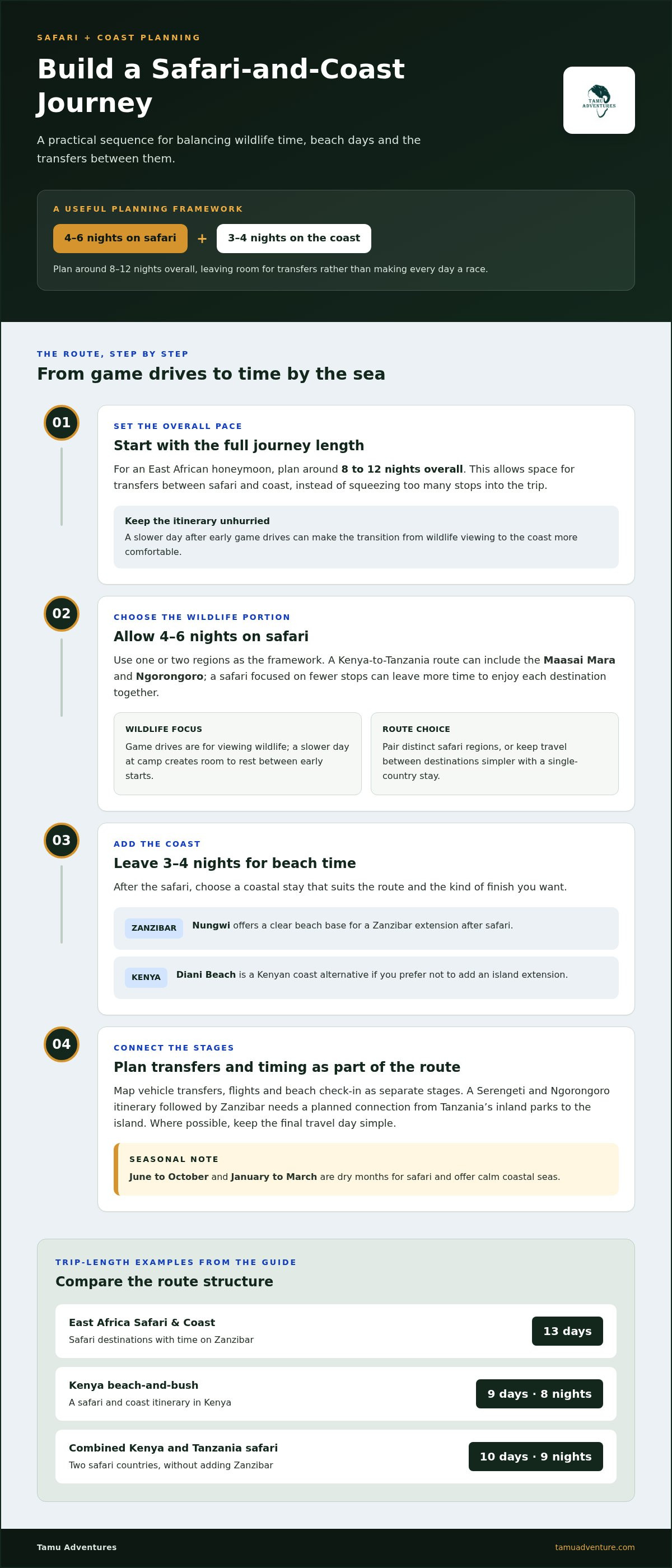
Pairing wildlife viewing with Zanzibar gives couples two distinct parts of one journey: game drives inland and unhurried time by the sea. A Kenya-to-Tanzania route can include the Maasai Mara and Ngorongoro before a beach extension. The contrast suits travellers who want an active adventure, then space to relax together.
For an East African honeymoon, plan around 8 to 12 nights overall. A useful framework is 4 to 6 nights on safari across one or two regions, followed by 3 to 4 nights on the coast. That leaves room for transfers without making every day a race between destinations. June to October and January to March are dry months for safari and offer calm coastal seas.
One listed East Africa Safari & Coast trip runs for 13 days. A separate Kenya beach-and-bush itinerary lasts 9 days and 8 nights, while a combined Kenya and Tanzania safari lasts 10 days and 9 nights. Use these examples to compare trip length and route structure, then consider where a Zanzibar stay fits into your own journey.
Nungwi gives a Zanzibar extension a clear beach base after the safari. Diani Beach offers a Kenyan coast alternative, avoiding an island extension when you prefer to remain in Kenya. Either choice can follow a wildlife route, but the airport connections and transfer arrangements affect how much time remains for the beach. Keep the final travel day simple where possible.
Before booking, map the safari vehicle transfers, flights and beach check-in as separate stages. For example, a Serengeti and Ngorongoro itinerary followed by Zanzibar needs a planned connection between Tanzania’s inland parks and the island. Keep a slow day in the schedule after early game drives. Two to four barefoot days on the coast can make the transition from tracking animals, perhaps an elephant, to beach time feel more balanced and amazing.
Couple travel styles and safari preferences
Couples can shape safari days around shared interests, preferred pace and how much privacy they value. A private vehicle gives two travellers more control over stops and timing, while a shared vehicle creates a more social experience. Safari schedules commonly include 2-3 game drives per day, so consider how early starts and time outdoors suit you both.
A private safari can give couples more control over their pace and time together, with accommodation chosen to match their preferred comfort level. You could focus on one destination in Kenya or Tanzania, or plan a wider cross-border journey. Tamu Adventures offers private and group travel options, with personalized itineraries shaped around your interests and schedule.
Traveller profiles affect the rhythm. Couples who want quiet time may prefer private drives and fewer stops; friends travelling together may enjoy sharing a vehicle. Families often need a different balance of activities and downtime. Safari vehicles typically accommodate 4-7 passengers, so a shared drive can include other guests and their schedules.
Overland travel also shapes the day. The drive from Nairobi to the Maasai Mara takes approximately 6 hours, while journeys between distant parks can add substantial road time. Compare drive days with nights at each lodge, and avoid squeezing several regions into a short itinerary. A slower Kenya safari can leave more time for unhurried game drives.
For support during a multi-stop trip, clear coordination helps with transfers, lodge arrangements and itinerary changes. Tamu Adventures provides 24/7 support, helping travellers navigate the practical details of a safari. This is useful when a journey connects Nairobi, Kenyan parks and Tanzania, where travel days and accommodation changes need careful coordination.
Choose your preferred balance of privacy, shared experiences and time on the road before settling on destinations. Then explore wildlife safari options that fit your travel style and preferred pace.
Tamu Adventures: Wildlife Safaris
Tamu Adventures plans personalized safari journeys for couples balancing wildlife viewing, comfort and time together. Wildlife Safaris and Luxury Safaris offer different travel styles, while Honeymoon Trips suit couples planning a shared celebration. Beach and Safari trips combine wildlife viewing with time by the coast.
Turn to Tamu Adventures when you’ve narrowed down your preferred destinations but want help bringing the route, accommodation and pace together. Personalized trip planning can shape these choices around your travel style, whether you’re considering a Kenya safari or a wider East African journey. Choose from curated safari packages and handpicked camps, lodges and hotels suited to different trip styles.
To discuss a safari that fits your plans, contact Tamu Adventures or visit tamuadventure.com.
Shape the trip around what matters to you
Before settling on a route, agree on what you most want to remember: a wildlife day, a quiet moment at camp or a coast-side finish. That shared priority can guide decisions about pace and comfort, especially when you and your partner picture different kinds of holidays. An East Africa safari for couples is most rewarding when its choices reflect both travellers, not simply a checklist of destinations.
Tamu Adventures offers Wildlife Safaris and Luxury Safaris, alongside Family Safaris for trips involving relatives. Match the trip style to its purpose, whether your plans centre on wildlife, added comfort or family travel. Note your preferred pace and accommodation style, and decide whether beach time belongs in the plan. Clear preferences make the next planning conversation more focused.
When you’re ready to explore your plans, contact Tamu Adventures to plan your safari. Your shared journey can start with a few thoughtful choices.
Frequently Asked Questions
How many people are typically in a safari vehicle?
Safari vehicles typically accommodate 4-7 passengers. A shared vehicle can include other travellers, while a private booking gives your party greater control over stops and timing. For couples, this choice affects the feel of each drive: sharing can bring a sociable atmosphere, while travelling privately gives you more room to follow your own pace and interests.
What is the best time of year to visit East Africa for wildlife viewing?
June to October and January to February are prime wildlife-viewing dry seasons in East Africa. During these periods, drier conditions can make animals easier to spot around water sources and across open areas. If you prefer greener landscapes and a quieter safari, November to December and April to May are green-season periods. The best fit depends on your priorities and route.
Can I combine Kenya and Tanzania in one safari?
Yes, Kenya and Tanzania can be combined in one safari. A route might link Kenya’s Maasai Mara with Tanzania’s Serengeti, letting you experience different landscapes on the same journey. Allow 10 to 12 days for a combined trip, so travel between regions does not take up too much of your stay. Plan the country transitions into your route from the start.
How many hours of game drives can I expect per day?
Safari schedules commonly include 2-3 game drives per day, but the total hours vary with the itinerary. A morning outing may focus on wildlife activity before returning to camp, while another drive can extend across more of the day. Park distances, road conditions and wildlife encounters influence timing, so expect each day’s rhythm to reflect its location and plans.
What is the best time of year for a couples safari in Kenya, Tanzania, Uganda, or Rwanda?
June to October and January to March are dry months for safari, making them useful periods to consider across Kenya, Tanzania, Uganda and Rwanda. November to December and April to May bring green-season conditions, with lusher scenery and a quieter feel. For an East Africa safari for couples, weigh wildlife priorities against the atmosphere and pace you want from the trip.
How many days should couples spend on an East Africa safari?
Allow at least 7 days for a safari in one country. For a Kenya and Tanzania combination, plan 10 to 12 days to make room for travel between regions. Couples adding a coast stay should include extra time for transfers and rest, rather than fitting beach days into the safari schedule. The route and number of destinations shape the pace.


